




Po pár mesiacoch odskrutkujete trysku, nazriete dovnútra a všimnete si tmavý povlak. Nie je to pekný pohľad a vašou prvou myšlienkou je asi to, či ste si tým celý čas čistili zuby. Nebojte sa. Nie ste jediní a neznamená to, že by ste čokoľvek zanedbali.
Chcete vedieť, prečo sa v ústnej sprche tvorí pleseň, ako zariadenie správne vyčistiť a ako zabezpečiť, aby sa už nevracala? Čítajte ďalej.
Prečo sa v ústnej sprche tvorí pleseň?
Po každom použití zostane v sprche trocha vody, v nádržke, hadičkách a tryskách. A stojatá voda niekde v teple a tme je pre pleseň dokonalým domovom. Nejde o poruchu zariadenia, len o fyziku a tú malú zábudlivosť, ktorú všetci poznáme.
Ako spoznáte, že je čas na čistenie?
Väčšinou si to všimnete skôr, než by ste čakali. Tmavé alebo ružkasté bodky v priehľadnej nádržke alebo v hadičke. Zatuchnutý zápach, keď si zariadenie prinesiete k nosu. Slizký, klzký povrch všade tam, kde stojí voda. Stačí jeden z týchto príznakov a je čas. A ak ste svoju ústnu sprchu ešte nikdy nečistili, ten čas je práve teraz, nech vidíte čokoľvek.
Ako správne vyčistiť ústnu sprchu
To, čo budete potrebovať, sa zmestí na dva riadky. Vlažná voda, biely ocot a voľná minútka. Nič viac.
Základy sú rýchle a nudné, ale pleseň držia na uzde. Po každom použití vylejte zvyšnú vodu z nádržky, nechajte zariadenie chvíľu bežať naprázdno, aby sa vyčistili hadičky, a nechajte trysku aj nádržku uschnúť na vzduchu. Otvorené, nie zatvorené.
Občas zaraďte aj hlbšie čistenie. Naplňte nádržku vlažnou vodou s trochou bieleho octu, približne dve polievkové lyžice na nádržku, a nechajte roztok pretiecť zariadením. Ocot rozpúšťa vodný kameň a usadeniny, na ktorých sa pleseň drží najradšej. Odnímateľné časti, ako nádržka a trysky, môžu chvíľu odmáčať v rovnakom roztoku. Na viditeľné bodky okolo otvorov trysky siahnite po vatovej tyčinke alebo starej zubnej kefke. Na záver všetko opláchnite čistou vodou, aby ste neskôr necítili chuť octu.
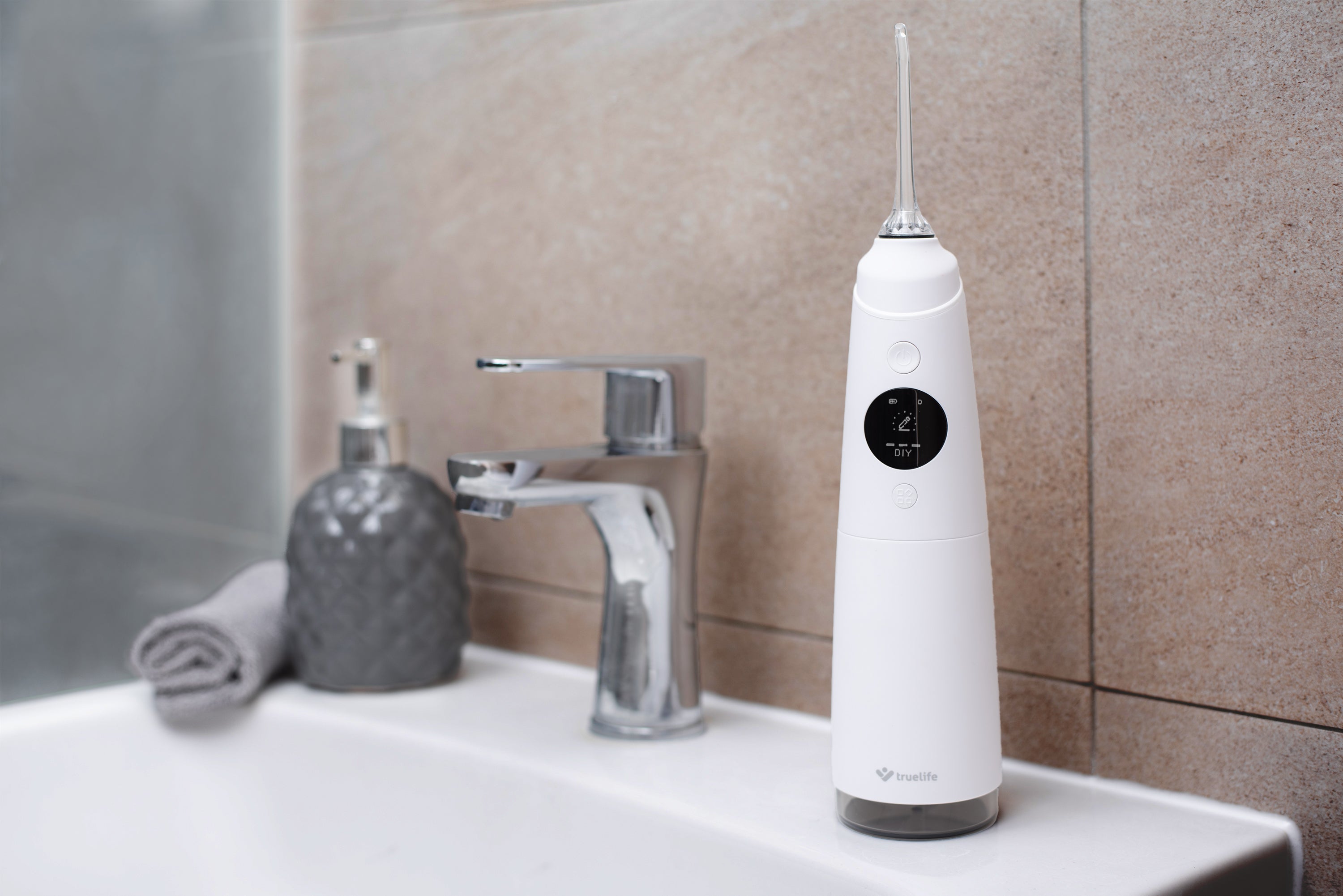
Práve tu sa hodí nádržka, ktorá sa dá jednoducho zložiť. Truelife AquaFloss Compact L100 má odnímateľnú 300 ml nádržku, takže ju ľahko opláchnete a vysušíte, a v balení nájdete rovno aj sadu náhradných trysiek. Trysky patria medzi diely, ktoré sa oplatí časom vymieňať.
Trysku vymieňajte približne každé tri až šesť mesiacov. Opotrebuje sa, ťažšie sa čistí a pleseň sa najradšej drží v jej drobných ryhách.

Ako predísť plesni úplne
Najlepšie čistenie je to, ktoré nikdy nemusíte robiť. Kľúč je jednoduchý. Nenechávajte v nádržke stáť vodu, keď sprchu nepoužívate. Po vyčistení nádržku vyprázdnite a nechajte ju aj trysku voľne vyschnúť, ideálne rozložené a otočené hore nohami, aby voda odtiekla. Mokrú trysku tiež nezatvárajte rovno do cestovného puzdra, tam nevyschne, a presne to pleseň chce. A ústnu sprchu používajte podľa možnosti denne. Keď ňou pravidelne preteká voda a zariadenie medzi tým uschne, pleseň nikdy nedostane šancu.
FAQ
Je čierna pleseň v ústnej sprche nebezpečná?
Čiernu pleseň si v ústach určite nechcete, ale netreba panikáriť. Pravidelným čistením sa jej dá ľahko predísť. Ak v zariadení vidíte povlak alebo cítite zatuchnutý zápach, vyčistite ho pred ďalším použitím.
Môžem na čistenie použiť bielidlo?
Bielidlo do vašich úst nepatrí, ani zriedené. Držte sa roztoku vlažnej vody a bieleho octu. Poradí si s plesňou aj vodným kameňom a v zariadení nezanechá nič škodlivé.
Ako často by som mal ústnu sprchu hĺbkovo vyčistiť?
Hĺbkové čistenie octom raz mesačne stačí. Rýchle opláchnutie a osušenie však patrí ku každému použitiu, a to je tá dôležitejšia polovica.
Ako dlho vydrží tryska?
Je dobré trysku vymieňať každé tri až šesť mesiacov. Opotrebovaná tryska čistí horšie a ľahšie na sebe udrží baktérie.
Môžeme si ústnu sprchu deliť v rodine?
Každý by mal mať vlastnú trysku. Telo zariadenia si deliť môžete, ale trysky si nevymieňajte, prenášajú baktérie. Väčšina ústnych spŕch má práve preto v balení trysky vo viacerých farbách, aby si ich nikto nepomýlil.

Ešte jedna minúta a budete radi, že ste ju venovali
Opláchnutie a osušenie ústnej sprchy zaberie asi minútu. Raz mesačne pridáte ocot a je to. Za tú trochu času navyše získate zariadenie, po ktorom radi siahnete, a ústa čisté bez nepríjemného prekvapenia čakajúceho v nádržke.
Ak so svojou ústnou sprchou cestujete, myslite na to aj na cestách. Truelife AquaFloss Mini M50 sa zmestí do svojho puzdra a vyprázdniť aj vysušiť ju môžete rovnako ľahko ako tú doma. Tak si na dovolenku nezoberiete so sebou ani pleseň.