



Leto je skvelé. No pre srdce a cievy predstavujú tropické teploty skutočnú záťaž. Najmä ak máte sami skúsenosti s problémami s krvným tlakom, alebo sa staráte o niekoho, kto nimi trpí.
Čo sa teda skutočne deje s krvným tlakom v horúčavách a prečo sa oplatí venovať mu počas letných mesiacov väčšiu pozornosť?
Čo horúčava robí s vaším krvným tlakom
Vaše telo sa v horúcom počasí snaží ochladiť samo seba. Cievy blízko povrchu kože sa rozširujú, aby teplo mohlo unikať, a viac sa potíte. Širšie cievy však znamenajú aj nižší odpor, čo vedie k nižšiemu krvnému tlaku. K tomu sa pridáva strata tekutín a minerálov potením, takže objem krvi v obehu ešte viac klesá.
Nie u každého je to však rovnaké. U niektorých ľudí horúčava krvný tlak naopak zvyšuje. Srdce musí pracovať tvrdšie, aby telo ochladilo, a v kombinácii s vlhkosťou alebo dehydratáciou môžu hodnoty stúpnuť na úroveň, ktorej by ste sa radšej vyhli.
Výsledkom môže byť závrat pri vstávaní, nezvyčajná únava, búšenie srdca alebo pretrvávajúca bolesť hlavy. Veci, ktoré si v lete ľahko vysvetlíte horúčavou, a predsa ide o signály, ktorým sa oplatí venovať pozornosť.

Kto by mal byť obzvlášť opatrný
Nie každý znáša horúce počasie rovnako. Medzi tých, ktorí by mali byť najviac opatrní, patria:
Starší dospelí. S pribúdajúcim vekom je telo menej účinné pri regulácii teploty a vnímaní signálov smädu. Starší človek môže byť dehydrovaný, pričom vôbec nemusí pociťovať smäd.
Ľudia s vysokým krvným tlakom. Horúčava a vlhkosť môžu posilniť alebo oslabiť účinok liekov na krvný tlak, takže hodnoty sa môžu správať inak, než ste zvyknutí.
Ľudia užívajúci diuretiká. Tablety na odvodnenie v kombinácii s letným potením výrazne zvyšujú riziko dehydratácie, viac, než si väčšina ľudí uvedomuje.
Ľudia so srdcovými ochoreniami. Horúce počasie priamo zaťažuje srdce. Zvyšuje srdcovú frekvenciu a v extrémnych prípadoch môže vyvolať vážnejšie príhody.
Ak sa vás niečo z toho týka, oplatí sa porozprávať sa s lekárom ešte pred príchodom najhorúcejšej časti leta. Aj len preto, aby ste zistili, či treba upraviť dávku liekov.
Čo pomáha: niekoľko praktických tipov
Pite skôr, než pocítite smäd. Pohár vody každú polhodinu je dobrý základ. Ak ste aktívni alebo je obzvlášť horúco, toto množstvo zdvojnásobte.
Vyhýbajte sa priamemu slnku medzi 11. a 16. hodinou. Vtedy je záťaž na telo najvyššia.
Vstávajte pomaly. Rýchla zmena polohy v horúčave zvyšuje pravdepodobnosť závratu. Vaše telo potrebuje chvíľu, aby prispôsobilo prietok krvi.
Sprchujte sa vlažnou vodou, nie studenou. Studená sprcha spôsobuje sťahovanie ciev, vďaka čomu telo vytvára viac tepla a ešte viac sa potí. Vlažná voda je v skutočnosti účinnejšia.
Nepreháňajte to s fyzickou aktivitou. Ranné alebo večerné cvičenie je v poriadku. Popoludňajšia jazda na bicykli pri 34 °C nie je dobrý nápad pre nikoho, kto má problémy s krvným tlakom.

Prečo sa oplatí mať v lete doma tlakomer
Pravidelné meranie vám poskytne obraz, ktorý inak jednoducho nezískate. Vidíte, či vaše hodnoty počas horúcich dní klesajú, stúpajú alebo kolíšu. A ak niekedy budete potrebovať navštíviť lekára, budete mať k dispozícii konkrétne čísla, ktoré mu môžete ukázať.
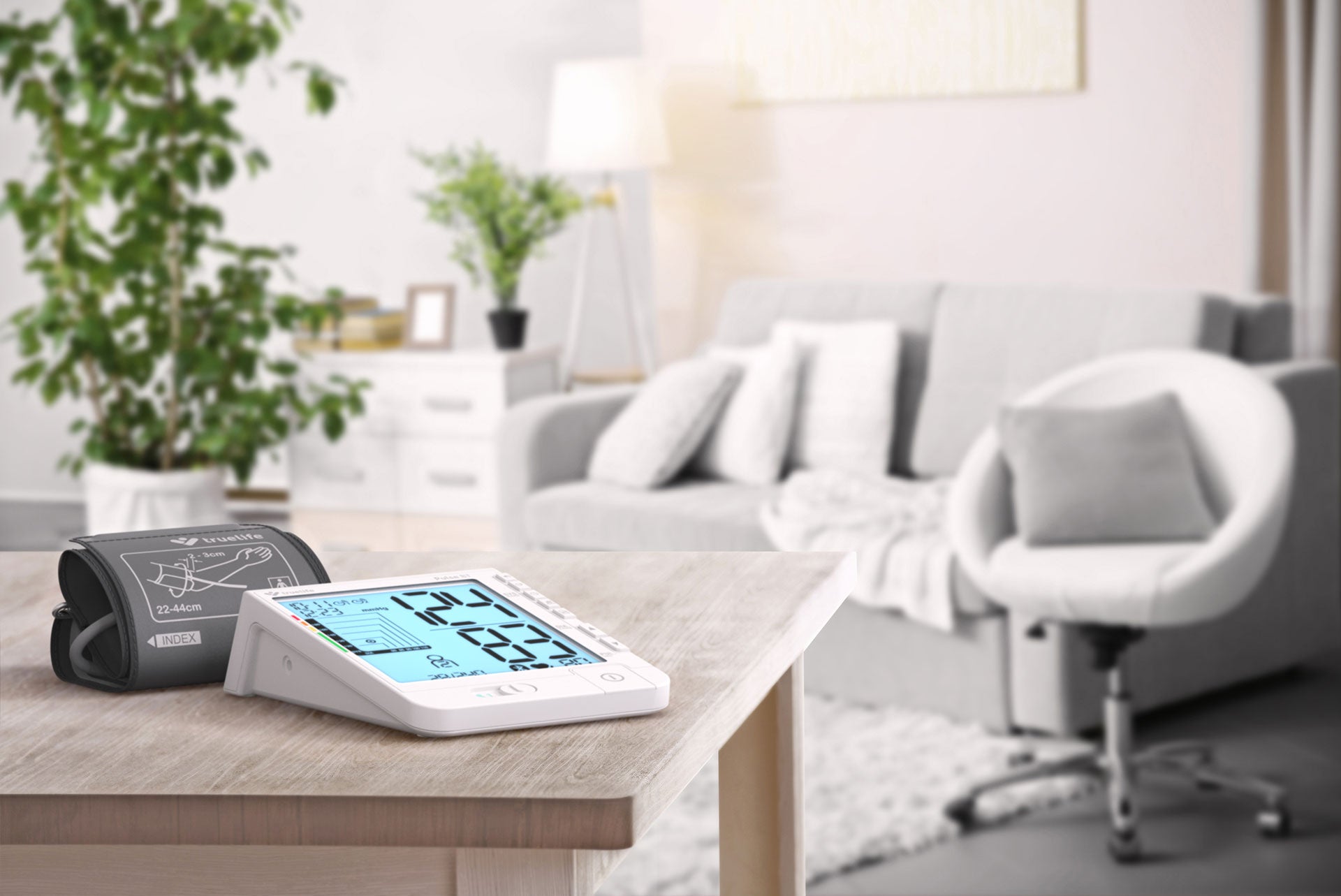
Tlakomery Truelife Pulse sú zámerne navrhnuté tak, aby sa jednoducho používali. Základný Truelife Pulse je jednoduchý na ovládanie pre každého. Má veľký, dobre čitateľný displej, ovládanie jedným tlačidlom, pamäť na 60 meraní a indikátor vysokého krvného tlaku, ktorý vás automaticky upozorní, ak sú hodnoty nad normálom. Funguje na batérie alebo cez USB, takže si ho môžete vziať so sebou na chatu alebo na dovolenku.
Ak chcete viac, Truelife Pulse B-Vision pridáva farebne odlíšené výsledky podľa smerníc WHO. Na displeji hneď vidíte, či je vaša hodnota normálna, hraničná alebo v rizikovej zóne, bez potreby čokoľvek vyhľadávať alebo porovnávať s tabuľkou. Hlasový asistent výsledky prečíta nahlas, čo je obzvlášť užitočné pre starších používateľov alebo kohokoľvek, kto ťažšie číta z menších displejov. Zariadenie ukladá až 120 meraní pre dvoch samostatných používateľov, takže dokáže bez problémov slúžiť celej domácnosti.
Pre tých, ktorí chcú mať svoje údaje vždy poruke, tu je aj Truelife Pulse BT, bluetoothový tlakomer, ktorý sa spároví s aplikáciou v smartfóne a zobrazuje históriu meraní v prehľadných grafoch. Praktický na sledovanie vlastných trendov a ľahko sa dá zdieľať s lekárom.

Často kladené otázky
Ako zistím, či horúčava ovplyvňuje môj krvný tlak? Závrat alebo bodky pred očami pri vstávaní, nezvyčajná únava, búšenie srdca alebo pretrvávajúca bolesť hlavy sú príznaky, ktoré sa oplatí brať vážne. Ak sa opakujú, zmerajte si krvný tlak a zapíšte si hodnoty. Budú užitočné, ak budete musieť hovoriť s lekárom.
Mám v lete užívať lieky na krvný tlak inak? Neupravujte dávku sami. Ak sa váš krvný tlak správa inak než zvyčajne, alebo sa cítite citeľne horšie, porozprávajte sa s lekárom. Úprava liečby v lete je niekedy správnym riešením, no vždy by mala byť lekárskym rozhodnutím.
Kedy je najlepší čas na meranie krvného tlaku v lete? Hneď ráno, pred jedlom a pred užitím akýchkoľvek liekov. Tak získate najspoľahlivejší výsledok. Počas horúčav sa oplatí pridať aj popoludňajšie meranie, najmä ak si všimnete akékoľvek príznaky.
Čo sa považuje za normálnu hodnotu krvného tlaku? Podľa smerníc WHO je normálny krvný tlak pod 120/80 mmHg. Hodnoty trvalo nad 140/90 mmHg sa považujú za vysoký krvný tlak a mali by sa prekonzultovať s lekárom. Pred meraním doma si na päť minút pokojne sadnite. Robí to väčší rozdiel, než by ste čakali.

Leto pod kontrolou
Vonkajšiu teplotu zmeniť nemôžete. Ale to, ako sa s ňou vaše telo vyrovnáva, a sledovanie vašich hodnôt, to zvládnuť môžete. Domáci tlakomer nie je len pre chorých alebo starších ľudí. Niekedy stačí jedno meranie, aby ste vedeli, na čom ste.
Objavte tlakomery Truelife Pulse