


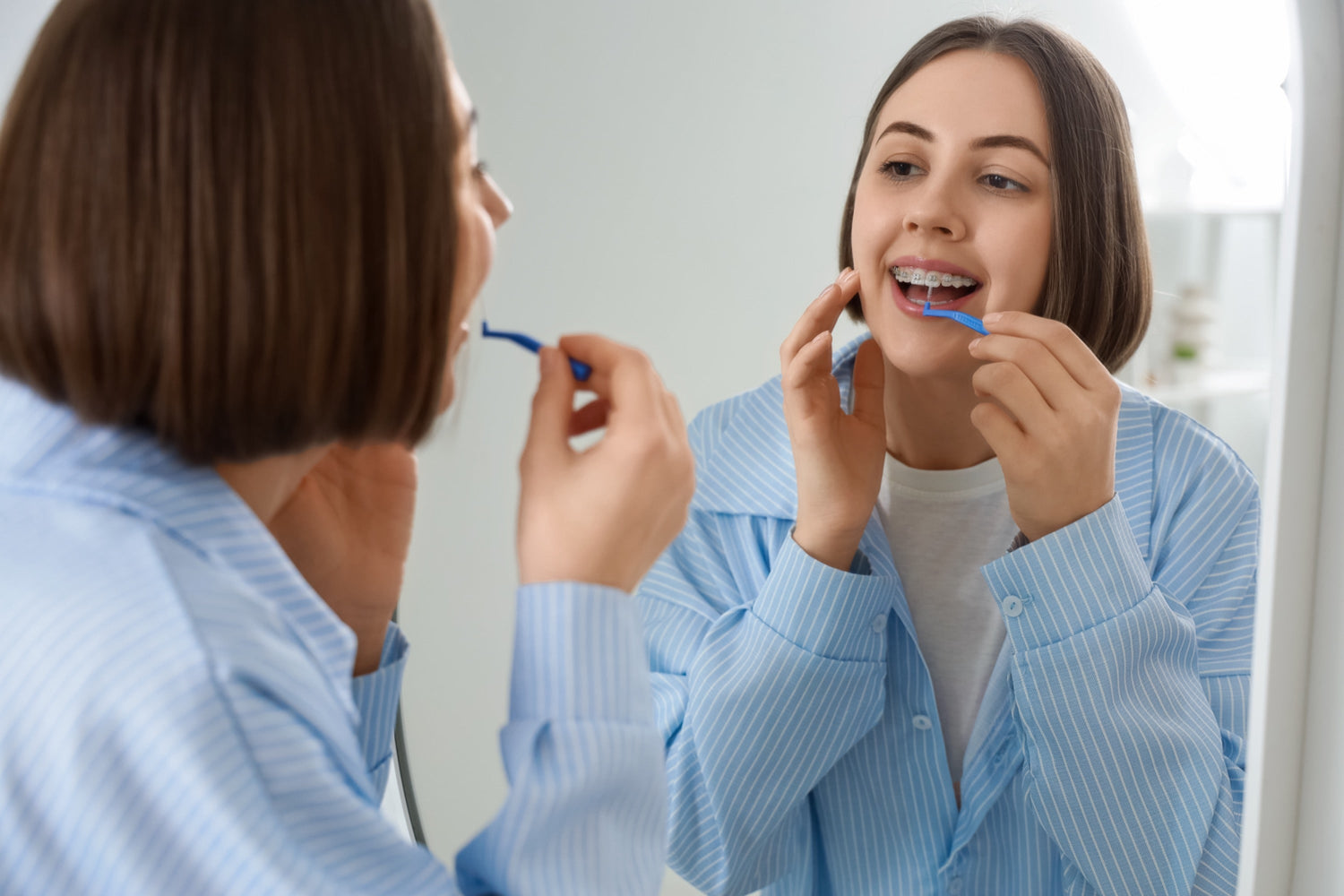
Aparat ortodontyczny w dorosłym życiu nie jest już niczym niezwykłym. Coraz więcej dorosłych odwiedza gabinety ortodontyczne, a nowoczesne rozwiązania są często na tyle dyskretne, że osoby wokół mogą ich nawet nie zauważyć.
O czym jednak nikt nie mówi, to gdzie właściwie umyć zęby po obiedzie ze współpracownikami albo ile to zajmie czasu. W tym artykule dowie się Pan/Pani, kiedy i gdzie realnie można zadbać o higienę jamy ustnej.
Dlaczego aparat ortodontyczny zmienia higienę jamy ustnej
Zamki, druty i gumki tworzą w ustach wiele nowych, trudno dostępnych miejsc. Ślina i język nie są w stanie skutecznie do nich dotrzeć, dlatego naturalny proces samooczyszczania staje się mniej wydajny. Płytka nazębna gromadzi się właśnie w miejscach trudno dostępnych dla szczoteczki.
Gdy higiena jamy ustnej jest zaniedbywana, wokół zamków mogą pojawić się kredowobiałe plamy. Powstają, gdy kwasy wytwarzane przez płytkę nazębną wypłukują minerały ze szkliwa. Według przeglądu badań naukowych występują one u mniej więcej połowy osób ze stałym aparatem. Po zdjęciu aparatu plamy te nie znikają same.
Problemem nie jest sam aparat, lecz płytka nazębna wokół niego. A z tym można sobie poradzić.
Rano w domu: kluczowy krok, którego nie można pominąć
Poranne i wieczorne mycie zębów to podstawa całej rutyny. Proszę poświęcić czas na jedno i drugie.
Proszę nie polegać wyłącznie na dwuminutowym minutniku. Dwie minuty to minimum dla zębów bez aparatu. Z aparatem trzeba oczyścić powierzchnie nad i pod zamkami, przestrzenie międzyzębowe oraz linię dziąseł. Może to spokojnie zająć dziesięć minut. Przydatny test to przejechanie językiem po zębach. Jeśli są gładkie, są czyste.
Proszę nie dociskać zbyt mocno. Wiele osób zwiększa nacisk, próbując dostać się pod drut, ale to szkodzi dziąsłom i szybko niszczy włosie szczoteczki. Włosie i tak zużywa się szybciej z aparatem, więc należy liczyć się z koniecznością wymiany końcówki mniej więcej raz w miesiącu.
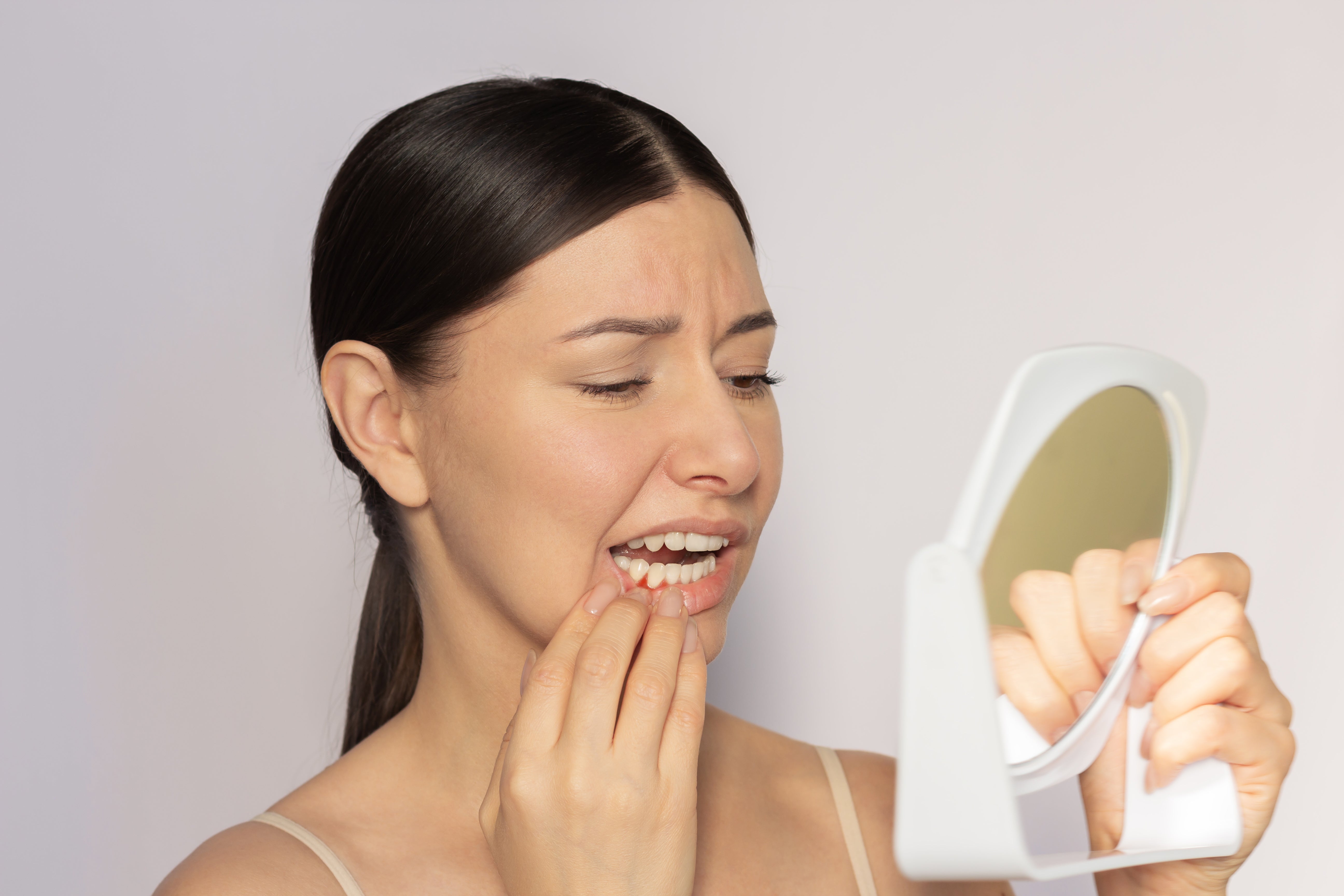
Jeśli dziąsła krwawią, proszę kontynuować ich czyszczenie. Krwawienie to zwykle reakcja na stan zapalny wywołany płytką nazębną, a nie dowód na to, że szkodzi sobie Pan/Pani. Wiele osób omija zajęte miejsce, co tylko pozwala stanowi zapalnemu się nasilić.
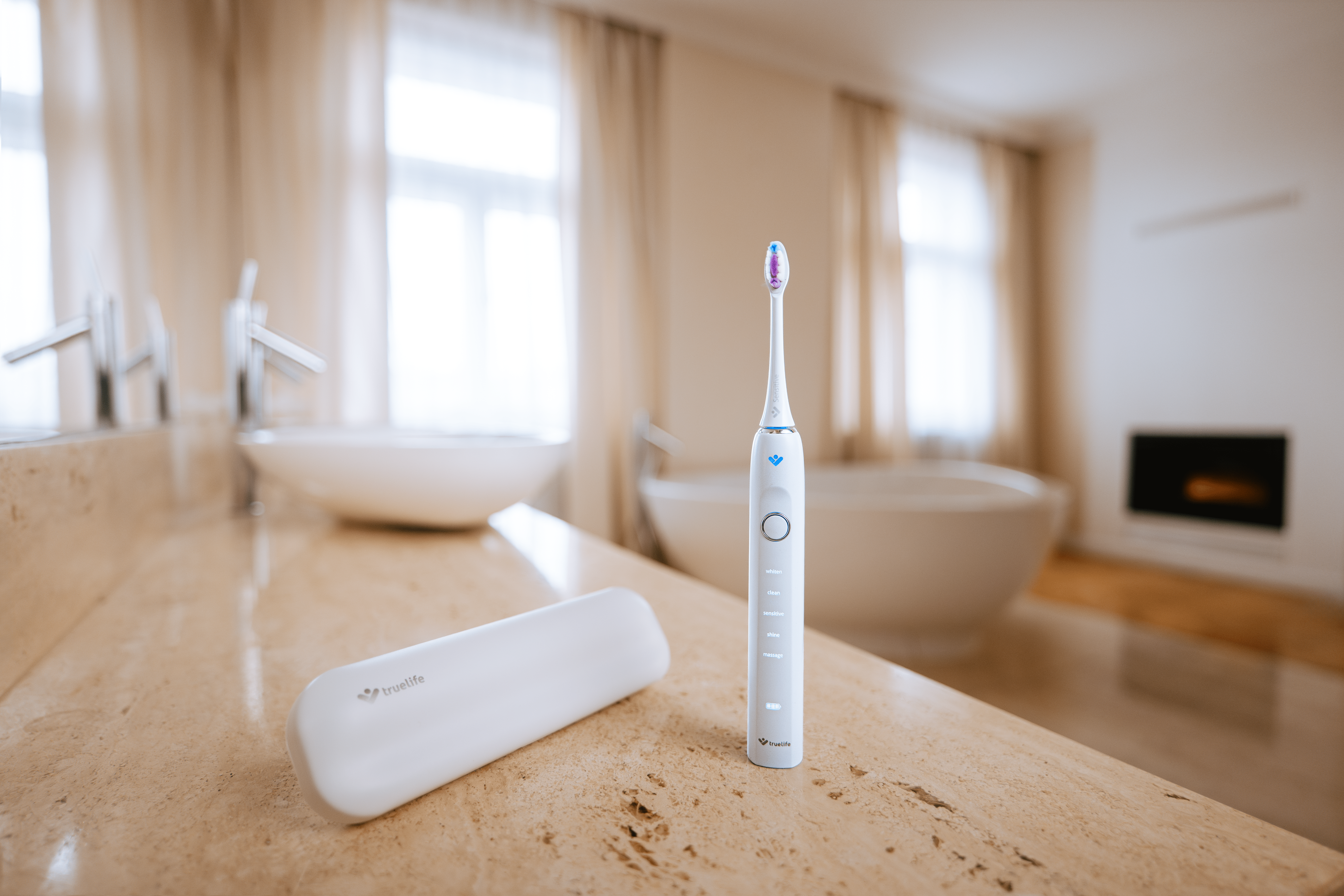
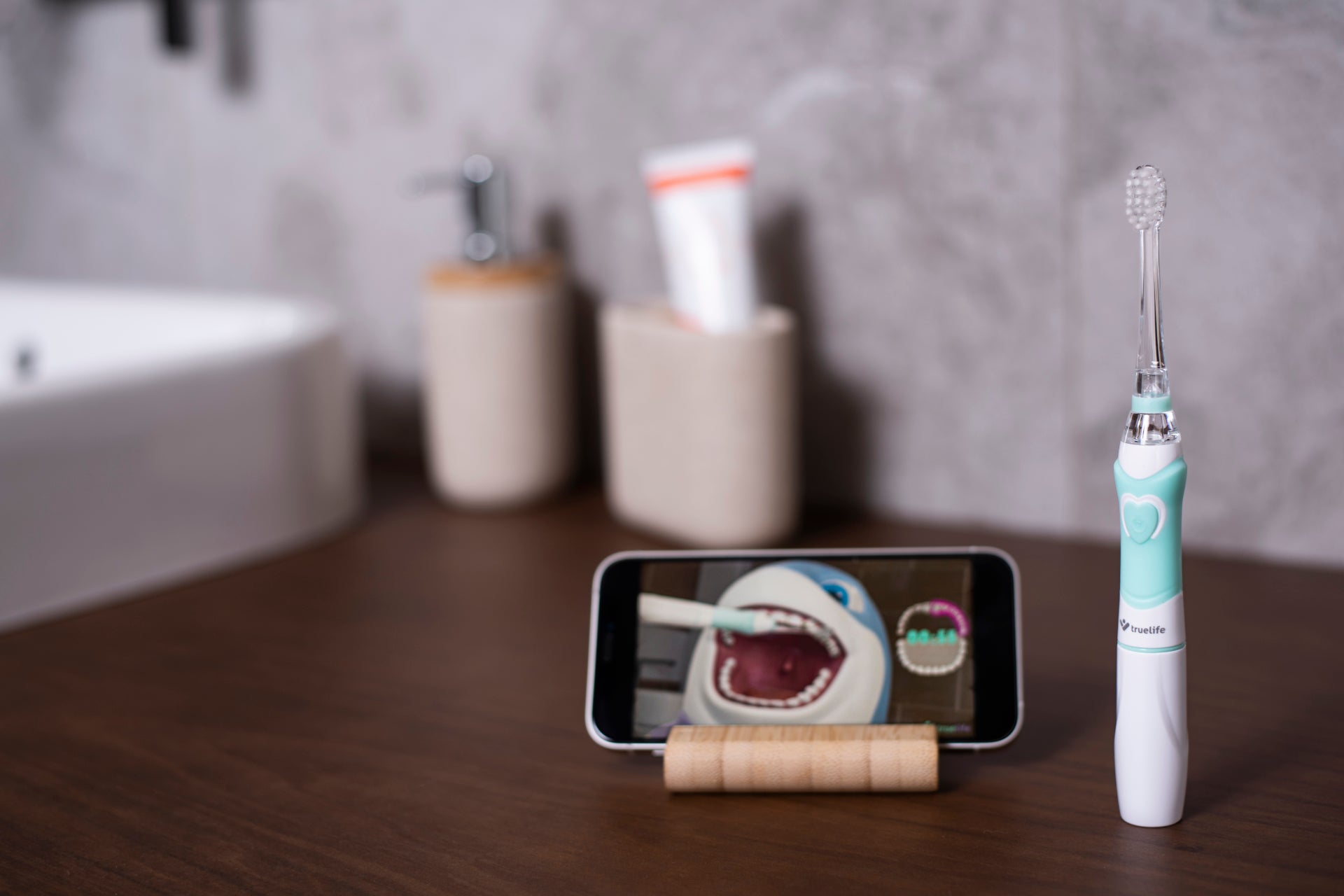
Nie musi Pan/Pani unikać szczoteczki sonicznej, mając aparat. Przekonanie, że drgania rozluźnią zamki, to mit. Zamki znacznie częściej odklejają się od ugryzienia twardego jedzenia niż od drgań szczoteczki. Jeśli po dokręceniu aparatu dziąsła są wrażliwe, doceniona może zostać szczoteczka z trybem delikatnym i kontrolą nacisku, taka jak Truelife SonicBrush Clean70 UV. Jej kolorowy wskaźnik jest widoczny w lustrze, dzięki czemu od razu wie Pan/Pani, kiedy naciska zbyt mocno.

Po obiedzie: dwie minuty mogą wystarczyć
Idealnie byłoby myć zęby po każdym posiłku. W rzeczywistości obiad może Pan/Pani jeść w stołówce firmowej, mając zaraz potem zaplanowane spotkanie.
Praktycznym kompromisem jest dokładna rutyna czyszczenia rano i wieczorem oraz szybkie oczyszczenie zębów w ciągu dnia. Nawet minuta ze szczoteczką, po której następuje dokładne płukanie wodą, jest lepsza niż nic. W przeciwnym razie resztki jedzenia mogą utkwić wokół zamków na wiele godzin.
Aby było to realne, trzeba mieć przy sobie niezbędny sprzęt. Szczoteczka, która mieści się w plecaku lub torebce, robi większą różnicę niż nawet najlepsze intencje. Truelife SonicBrush Compact waży 100 gramów, ma etui podróżne i wytrzymuje na jednym ładowaniu do 30 dni, więc nie ma potrzeby noszenia ładowarki.
Co zrobić, gdy podczas obiadu w restauracji coś utknie za drutem? Nie należy tego usuwać paznokciem ani wykałaczką. Proszę wypić trochę wody, przepłukać usta i zająć się tym porządnie później.

Wieczorem: oczyszczanie miejsc, do których nie sięga szczoteczka
To właśnie wtedy powstaje prawdziwa różnica. Wieczorna rutyna jest najważniejsza, ponieważ w nocy produkcja śliny spada, dając płytce nazębnej większą szansę na wyrządzenie szkód.
Sama szczoteczka nie wystarczy. Przestrzenie między zębami oraz obszary wokół zamków trzeba czyścić szczoteczką międzyzębową i ortodontyczną nicią z nawlekaczem, który pozwala przeprowadzić nić pod drutem. Produkty te są dostępne w większości aptek i niestety stanowią niezbędny element rutyny. Szczegół, który często umyka uwadze, to fakt, że przestrzenie między zębami zmieniają się w miarę ich przesuwania podczas leczenia. Rozmiar szczoteczki międzyzębowej, który sprawdzał się na początku, sześć miesięcy później może już nie być odpowiedni.
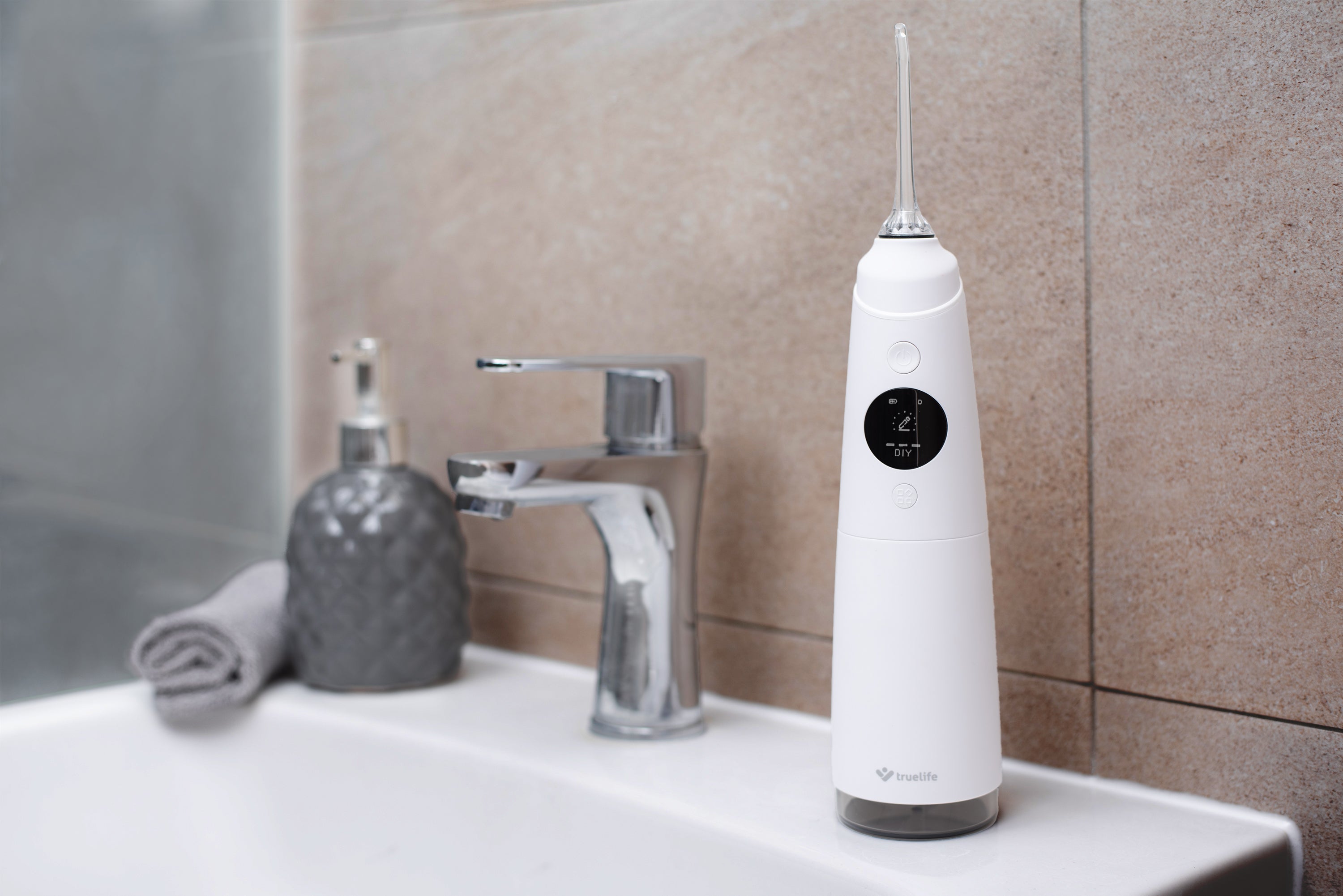
Czas poświęcany na nawlekanie nici pod drutami można znacznie skrócić, korzystając z irygatora. Truelife AquaFloss Compact L100 ma końcówkę ortodontyczną zaprojektowaną specjalnie do zamków i drutów, a także tryb POINT, który skierowanym strumieniem wody usuwa resztki jedzenia spomiędzy zębów. Należy jednak pamiętać o jednej ważnej rzeczy: irygator nie zastępuje szczoteczki międzyzębowej. Może wypłukać luźne cząstki, ale płytkę nazębną przylegającą do powierzchni zęba nadal trzeba usuwać mechanicznie.

Ma Pan/Pani nakładki? Wtedy rutyna jest zupełnie inna
Mycie zębów z wyjmowanymi nakładkami jest proste. Po prostu wyjmuje je Pan/Pani i myje zęby jak zwykle. Dochodzi jednak drugi obowiązek: czyszczenie samych nakładek.
Zawsze należy umyć zęby przed ponownym założeniem nakładek. W przeciwnym razie zamyka Pan/Pani płytkę nazębną i cukier pod plastikiem na wiele godzin, tam gdzie ślina nie ma do nich dostępu. To jeden z najszybszych sposobów na rozwój próchnicy.
Proszę czyścić nakładki osobno i delikatnie. Proszę używać letniej wody i miękkiej szczoteczki, której nie używa Pan/Pani do zębów. Nigdy nie należy używać gorącej wody, ponieważ może trwale odkształcić plastik. Nigdy też nie należy używać zwykłej pasty do zębów. Jej cząstki ścierne mogą porysować nakładki, co pozwala bakteriom i pigmentom osiadać w rowkach. Do dokładniejszego, regularnego czyszczenia można stosować tabletki czyszczące.
Nosząc nakładki, proszę pić tylko zwykłą wodę. Kawa, herbata i wino mogą je zabarwić, a cukier z innych napojów może pod nimi utkwić. Kawę nadal może Pan/Pani pić, wystarczy najpierw zdjąć nakładki i umyć zęby przed ich ponownym założeniem.
Proszę pamiętać, że nakładki działają tylko wtedy, gdy nosi się je od 20 do 22 godzin dziennie. Ciągłe zdejmowanie ich na każdy łyk kawy nie jest więc praktycznym rozwiązaniem na dłuższą metę.
Co jeść, a czego unikać
Stały aparat nie oznacza, że musi Pan/Pani przestać jeść normalne jedzenie. Musi Pan/Pani jedynie zmienić sposób jedzenia. Nie należy gryźć bezpośrednio całego jabłka, marchewki ani twardej skórki. Zamiast tego należy pokroić je na mniejsze kawałki. Należy unikać toffi, gumy do żucia, orzechów i lodu, ponieważ mogą one obluzować zamek lub przykleić się do aparatu tak mocno, że będzie go niezwykle trudno usunąć.
Przy wyjmowanych nakładkach nie ma żadnych ograniczeń dietetycznych. Proszę je wyjąć i jeść, co tylko Pan/Pani chce.
Najczęściej zadawane pytania
Jak często powinienem/powinnam myć zęby z aparatem?
Przy stałym aparacie idealnie jest myć zęby po każdym posiłku. Przynajmniej dokładnie należy oczyścić je rano i wieczorem, a w ciągu dnia wykonać szybkie mycie. Wieczorne mycie jest najważniejsze, ponieważ w nocy produkcja śliny spada, co ułatwia gromadzenie się płytki nazębnej.
Czy mogę używać szczoteczki sonicznej z aparatem?
Tak, szczoteczka soniczna jest bezpieczna w użyciu z aparatem i nie obluzuje zamków. Ruch płynu wokół włosia może też pomóc oczyścić miejsca trudno dostępne dla szczoteczki manualnej. Warto pamiętać, że końcówki szczoteczki zużywają się szybciej przy noszeniu aparatu.
Czy irygator może zastąpić szczoteczkę międzyzębową?
Nie. Irygator nie może zastąpić szczoteczki międzyzębowej, ale może znacznie ułatwić rutynę. Szybko wypłukuje resztki jedzenia z zamków i drutów, ale płytkę nazębną przylegającą do powierzchni zęba nadal trzeba usuwać mechanicznie.
Jak czyścić nakładki, aby zapobiec nieprzyjemnemu zapachowi i zażółceniu?
Nakładki należy czyścić miękką szczoteczką pod letnią bieżącą wodą. Nie należy używać pasty do zębów ani gorącej wody. Pasta do zębów może porysować plastik i pozwolić bakteriom osiąść w rowkach, a gorąca woda może odkształcić nakładki. Do regularnego, dokładniejszego czyszczenia można stosować tabletki czyszczące.
Jakich pokarmów unikać przy stałym aparacie?
Należy unikać twardych i lepkich pokarmów, takich jak orzechy, lód, toffi, guma do żucia i twarde skórki. Jabłka i marchewki należy kroić na mniejsze kawałki zamiast gryźć je przednimi zębami, gdzie zamki są najbardziej narażone.
Sześć miesięcy, rok czy dwa lata
Aparatu nie nosi się przez zaledwie kilka tygodni. Leczenie nakładkami trwa zwykle około roku, natomiast stały aparat może być potrzebny przez dwa lata, a nawet dłużej. To długi czas, by co wieczór czuć frustrację związaną z higieną jamy ustnej.
Warto więc zbudować rutynę, która działa właśnie dla Pana/Pani. Nie musi być najdoskonalsza z możliwych. Musi być taka, której faktycznie będzie Pan/Pani przestrzegać. Prosty uśmiech na koniec leczenia jest tego wart, ale zęby pod spodem też powinny być zdrowe.