
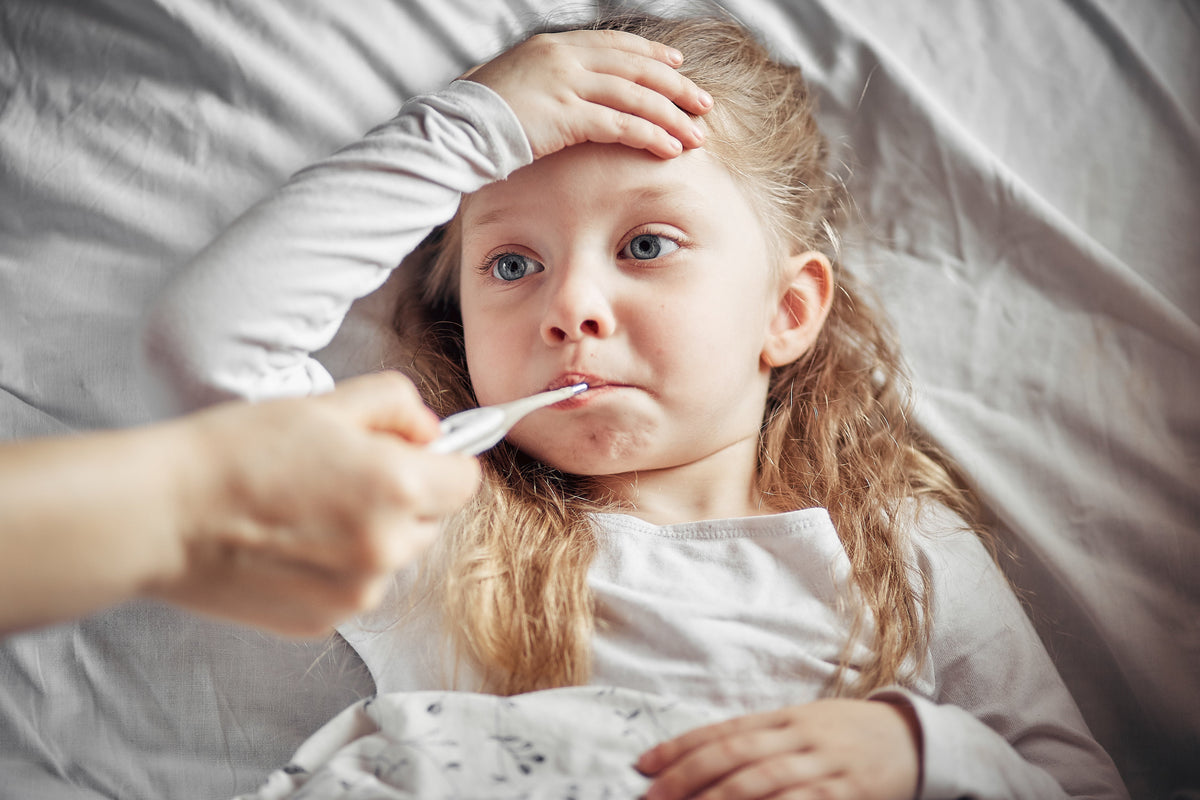
Autumn is here, and with it the first viral bugs. Your child's forehead feels hot, you reach for the thermometer, and a moment later you're wondering whether it's still fine or already time to call the doctor.
But a reading only means something when you know where and how you took it. We'll show you where temperature is measured most accurately, what the number means by age, and which mistakes to avoid.
Where temperature is measured most accurately
Temperature varies depending on where you measure it. The reading closest to true core temperature comes from the rectum, which makes it the most reliable option for babies and young children. Every site gives a slightly different value.
- Rectum. Closest to true core temperature. The most reliable choice for babies and young children.
- Mouth. A good compromise for older children and adults who can hold the thermometer still under the tongue.
- Under the arm. The most comfortable, but the least accurate. Useful for a quick check.
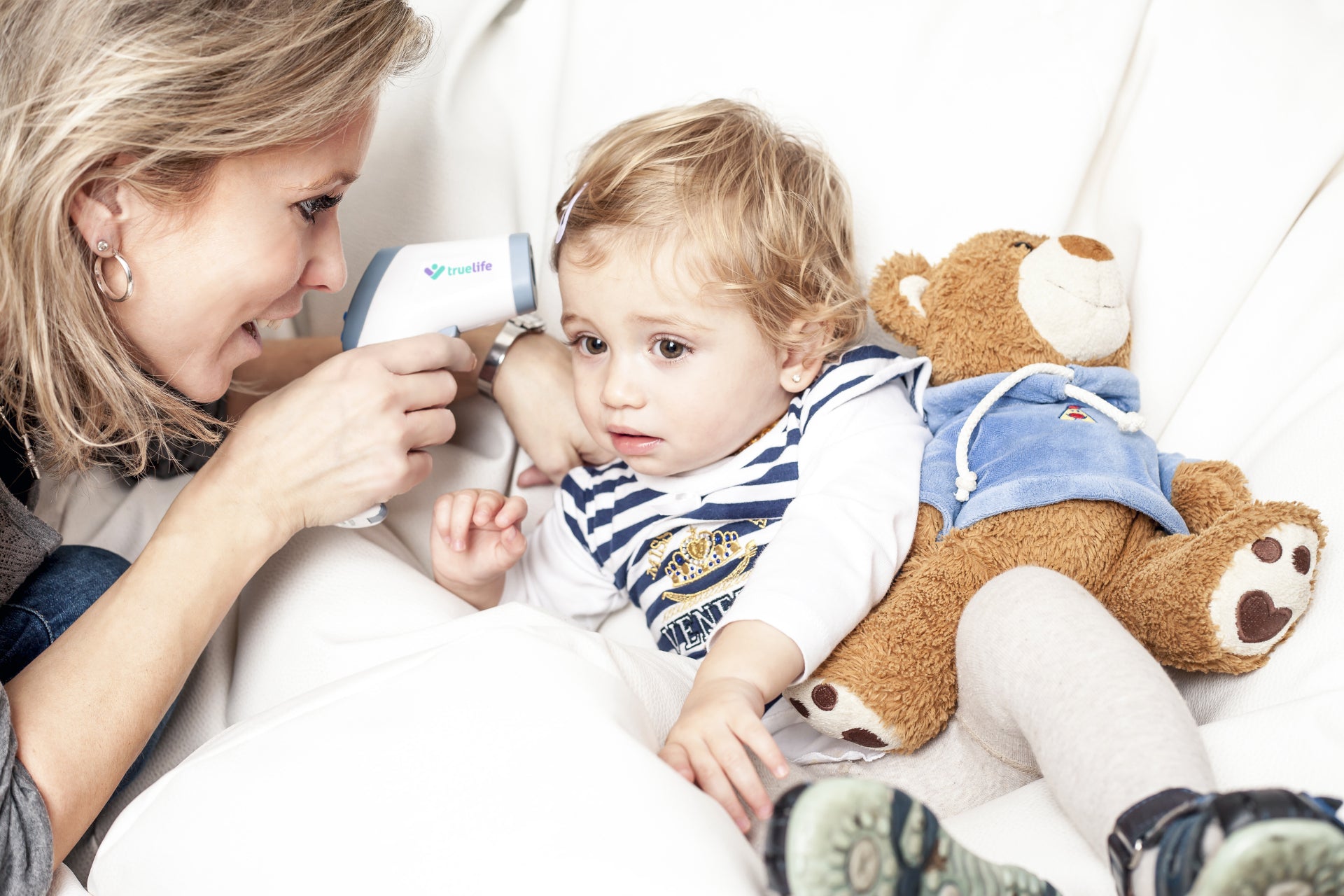
- Ear and forehead. Fast and hygienic, but sensitive to technique and surroundings. The ear is also unreliable in children under six months.
Why readings from different sites can't be compared
A reading taken in the rectum and one taken on the forehead are not the same numbers, so do watch out for that.
In the rectum and ear the reading tends to be about half a degree higher than in the mouth. Under the arm and on the forehead it's about half a degree lower. So if you measure on the forehead one time and under the arm the next, you're comparing the incomparable.
Tip: With one person, measure at the same site and with the same thermometer whenever you can. That's the only way to tell whether the temperature is rising or falling.

What counts as a fever
The ranges differ by measuring site. Roughly, it looks like this.
- Raised temperature: roughly 37 to 38 °C.
- Fever: from 38 °C measured in the rectum, ear or on the forehead. Under the arm the threshold is about half a degree lower.
- High fever: above 40 °C. Here it's always wise to seek help quickly.
A fever itself isn't the enemy. It's the body's natural defence as it fights an infection. The overall condition matters more than a single number.
Fever in children and babies: what to watch for
Stricter rules apply to the littlest ones, and it's worth knowing them in advance, calmly, rather than in a panic over the cot.
- Baby under 3 months. A temperature around 38 °C is a reason to contact a doctor without delay. For a newborn under a month old, always.
- Older children. Go mainly by their overall condition. If the child is drinking, responsive and interested in their surroundings, there's usually no need to rush.
Seek a doctor if warning signs appear: unusual drowsiness or apathy, refusing fluids, repeated vomiting, laboured breathing or febrile seizures. In older children, also a fever that lasts more than three days.
Always consult a doctor or pharmacist about bringing a fever down and about any medicines. A thermometer helps you keep track of the situation, but it doesn't replace a professional examination.

The most common measuring mistakes
Most inaccuracies don't come from the thermometer, but from how we use it.
- Comparing readings from different sites on the body.
- Taking an oral reading right after eating, drinking or chewing gum.
- Measuring right after coming in from the cold or after activity.
- A sweaty forehead, hair or the wrong distance with non-contact measuring.
- Movement and crying in children, which push the reading up.
How to measure temperature at home, step by step
- Get the thermometer and your hands ready. Clean hands, a clean thermometer. Keep a separate one for the rectum and the mouth.
- Choose a site and stick to it. For babies the rectum, for older children and adults the mouth or under the arm. Keep the armpit dry, the tip in the hollow and the arm pressed against the body.
- Wait when you need to. After eating or drinking, leave at least fifteen minutes before an oral reading.
- Measure calmly. Keep the child occupied for a moment so they don't fidget. Restlessness skews the result.
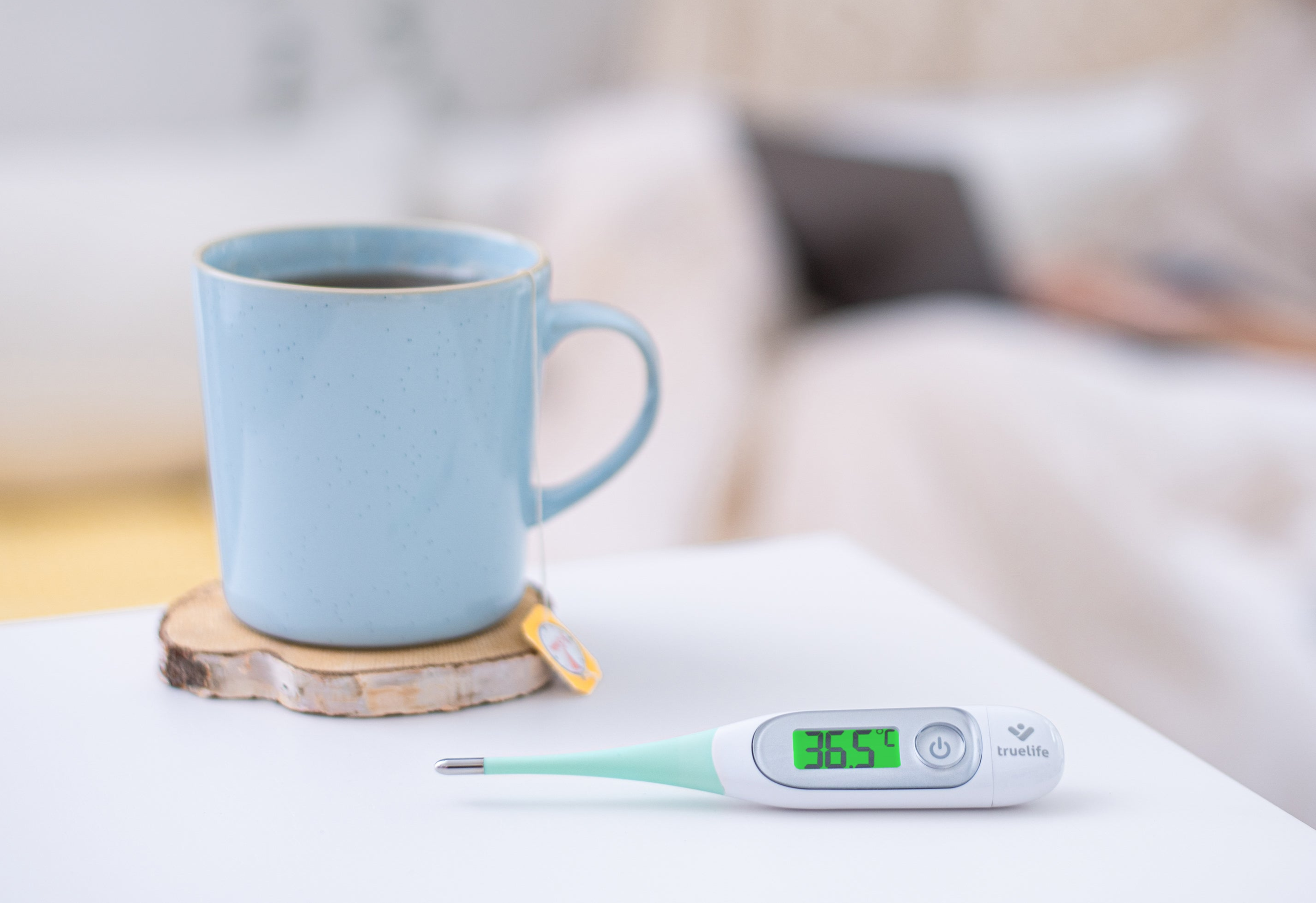
For contact measuring, a thermometer that's both fast and gentle comes in handy. The Truelife Care T3 has a soft flexible tip, so it's comfortable even for babies, and it measures temperature in the rectum, mouth and under the arm. You get a result in about five seconds, and the colour of the display backlight gives you a rough guide to whether the reading is normal, raised or a fever.

Frequently asked questions
Where is temperature measured most accurately? The reading closest to true core temperature comes from the rectum, which is why it's recommended mainly for babies and young children.
What counts as a fever? A fever usually starts at 38 °C measured in the rectum, ear or on the forehead. Under the arm the threshold is about half a degree lower.
What's the difference between an underarm and a rectal reading? A rectal reading is usually about half a degree higher than an underarm one.
When should you call the doctor about a baby's fever? For a baby under 3 months, a temperature around 38 °C is a reason to contact a doctor without delay. For a newborn, the same always applies.
How long should you wait after eating before an oral reading? After eating or drinking it's better to wait at least fifteen minutes, otherwise the reading may be skewed.


