




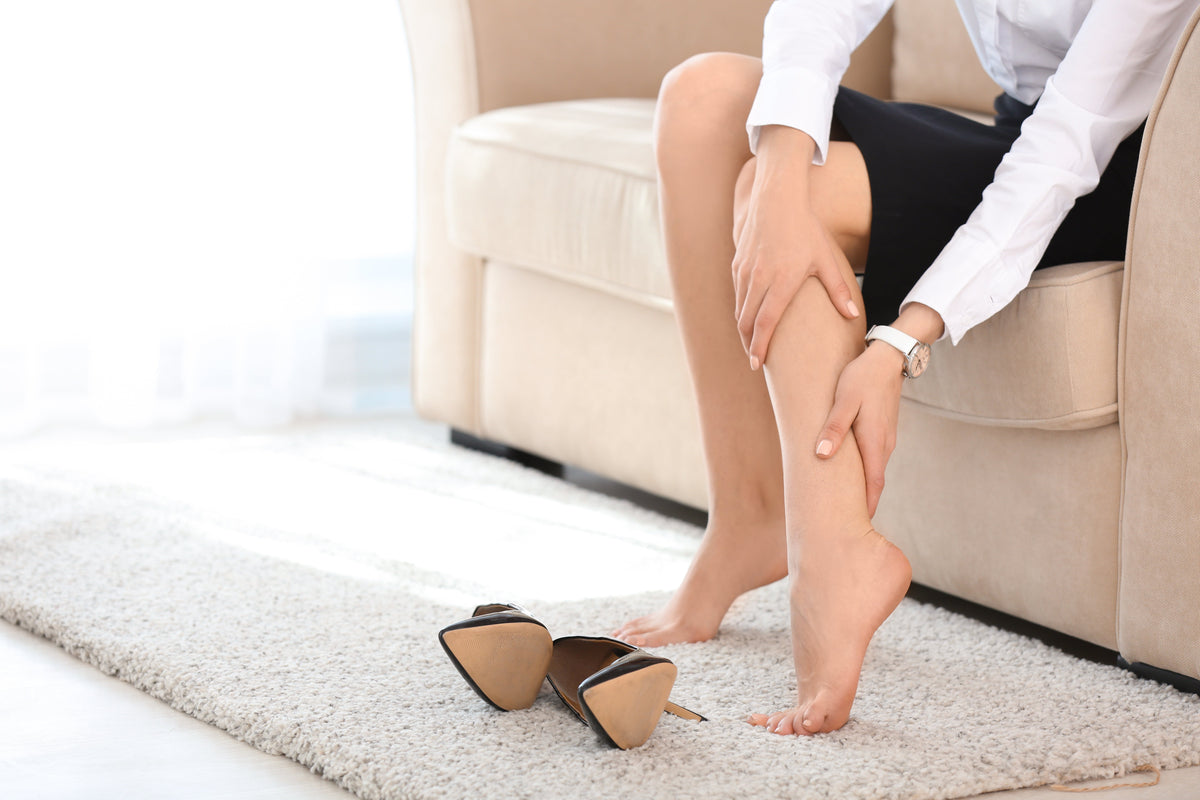
On your feet all day, or stuck at a desk, and in the evening it catches up with you. Your feet are heavy and tired, and all you want is to put them up and do nothing for a while.
Curious why your feet feel like this in the evening, what actually helps, and when it’s better to pay attention? Read on.
Why your feet feel tired in the evening
Tired, heavy feet usually have very ordinary causes.
- Standing for long periods. A whole day on your feet makes itself felt as heaviness and tension.
- Sitting for long periods and too little movement. When your feet barely move all day, fatigue sets in too.
- Overdoing it. A long walk, a workout, or a day on the go without a break.
- Unsuitable footwear. Tight or uncomfortable shoes only add to the tiredness.
What eases tired feet
You can handle most of it yourself, and it doesn't take long.
- Put your feet up. A while with your feet raised pleasantly eases that feeling of heaviness.
- Move about and take breaks. A short walk or a stretch helps after both standing and sitting.
- Warm them up. Warmth relaxes and warms, which you'll appreciate especially with cold feet in autumn.
- Treat them to a massage. A foot massage after a demanding day calms and releases tension.
- Choose comfortable footwear. Give your feet room and support through the day.
Tip: A combination works best. Ten minutes with your feet up, then warmth and a massage, and you'll feel the difference that same evening.

What to expect from a massage, and what not to
What it brings is pleasant relief, warmth, released tension and a feeling of lighter feet. It's mainly relaxation and calm after a day on your feet, and that alone is worth it.
What there's no point expecting, on the other hand, are miracles. It won't replace movement or comfortable shoes, and it isn't a treatment. If something troubles you over the long term, a massage won't fix it.
When to be careful
Foot massage isn't for everyone, and in some situations it's better to check first.
- Pregnancy.
- Diabetes and reduced sensation in the feet.
- Varicose veins.
- Cardiovascular conditions.
- A fresh injury, swelling or inflammation.
- Open wounds and skin problems.
- A blood clot or recovery after surgery.
In these cases, consult a doctor first. And if your feet hurt or swell even after rest, or trouble you over the long term, don't leave it to a massage and see a doctor. A massage device is pleasant relief, not a substitute for professional care.
A home ritual for tired feet
Fitting in an evening moment for your feet is easier than it sounds.
- Find some quiet. Sit somewhere comfortable where no one will rush you.
- Add warmth. Warming up relaxes, and it's especially nice with cold feet.
- Treat yourself to a massage. Let your feet calmly turn tension into relief.
- Keep it to fifteen minutes. More isn't better. A short while is plenty.
The Truelife RelaxFeet F3 foot massager brings all of this together nicely. Two rotating heads knead the soles in the style of Shiatsu, and heating up to 40 °C warms the feet pleasantly, either alongside the massage or on its own as a heating pad. After fifteen minutes it switches off by itself, so you don't have to think about anything, and when you remove the top cover you can sit it behind your back too.

Frequently asked questions
Why do I have tired feet in the evening? Most often it's down to prolonged standing or sitting, overexertion or unsuitable footwear.
How can I quickly ease tired feet at home? It helps to put your feet up, stretch, warm them and treat them to a foot massage.
How long should you massage your feet? Usually 15 to 20 minutes is enough. More isn't better.
Who should avoid foot massage? With pregnancy, diabetes, varicose veins, a fresh injury or a blood clot, consult a doctor first.

