



Summer gives the body a hard time with heat, but winter isn't entirely work-free for blood pressure either. As soon as it turns cold, the body reacts and pressure shoots up for many people.
But that's no reason to panic, more a reason to pay attention. Let's go through why pressure usually rises in the cold, who should be careful, and how to keep an eye on it properly at home.
What cold does to blood pressure
In the cold, blood vessels constrict to keep the body warm. Narrowed vessels put up more resistance to the blood, and the heart has to push harder, so blood pressure usually goes up.
In a healthy person that rise is temporary and the body copes with it. But for someone with higher pressure or a heart to watch, even a small shift can mean more. Readings therefore tend to be a little higher in winter than in summer, even by a few units.
Who should be careful in winter
Attention pays off above all for those on whom the cold has the biggest effect.
- People over 65, because vessels lose elasticity with age.
- People with high blood pressure.
- People with a cardiovascular condition or diabetes.
If you or someone close to you falls into one of these groups, it isn't about being afraid, but about being aware of it and keeping a slightly closer eye on blood pressure in winter.

What helps
Most of the measures are pleasantly ordinary, and anyone can manage them.
- Dress in layers. Protect your head, hands and feet, as this is exactly where heat escapes.
- Keep your home warm. A heated home is care for your vessels too.
- Stay active. Keep moving even in winter, at home if need be.
- Watch salt and alcohol. Neither does blood pressure any favours.
- Monitor your pressure and write it down. An overview over time says more than a single reading.
Tip: Cold remedies aren't always neutral. Some over-the-counter products, especially for a blocked nose, can raise blood pressure. If you have high blood pressure, check with a doctor or pharmacist before taking them.
How to measure blood pressure correctly at home
A reading only means something when you take it correctly. And this is exactly where most mistakes happen.
- Sit down and settle. Rest for 5 to 10 minutes before measuring. Sit with your back supported and your feet on the floor, not crossed.
- Put your arm in the right position. Bare arm resting at heart level. Place the cuff about two fingers above the elbow.
- Don't talk while measuring. Talking and movement skew the reading. For at least half an hour beforehand, skip coffee, cigarettes and exercise.
- Measure more than once and write it down. Take two or three readings with a short pause, and note the values. It helps you and your doctor.
One more thing: an upper-arm monitor is recommended, as wrist ones tend to be less reliable. And if you get higher readings, don't adjust your medication yourself, that belongs in a doctor's hands.
Why have a blood pressure monitor at home
Measuring at home has one big advantage. It shows your pressure on an ordinary day and in the calm of home, not just now and then at the surgery. That way you can catch how it changes, for instance in winter, and you have something to show your doctor.
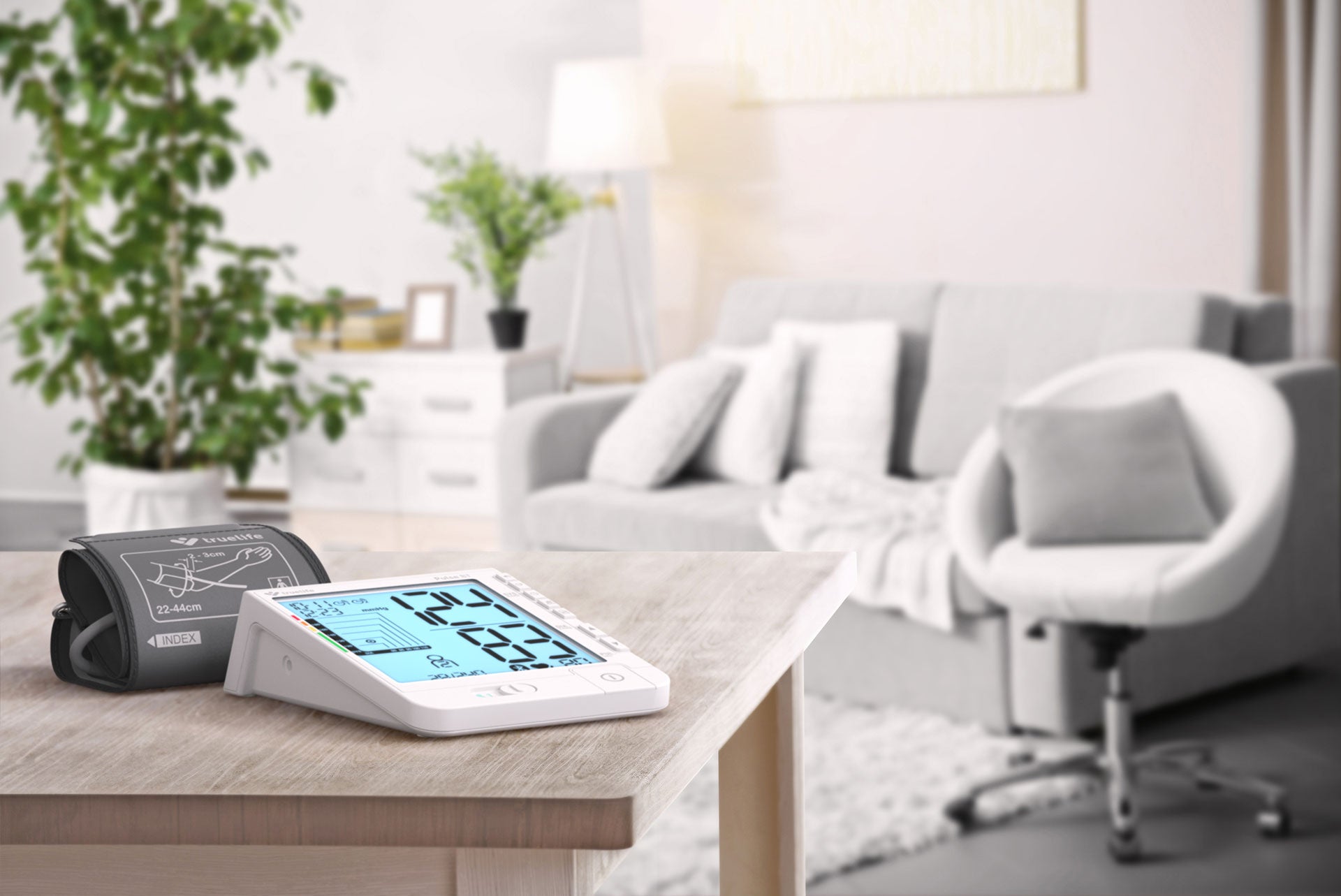
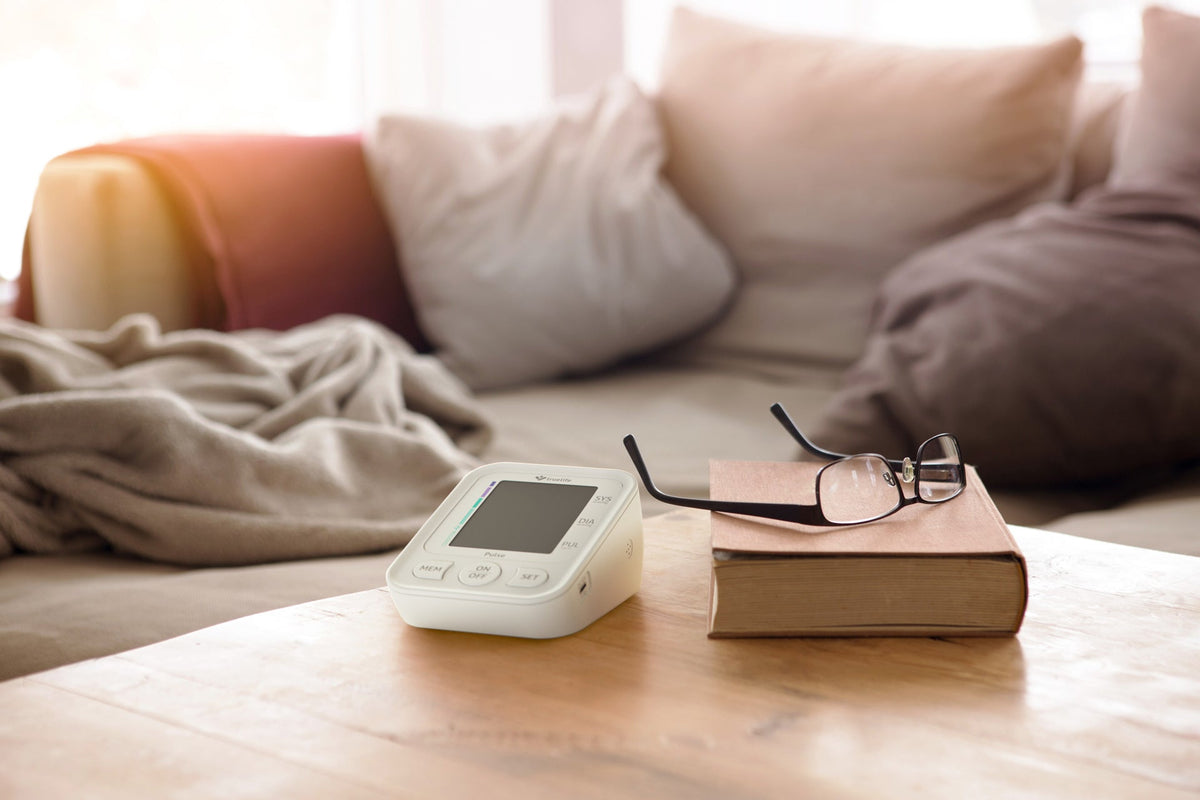
The Truelife Pulse blood pressure monitor is a good helper for this. It's an upper-arm model, the type experts recommend, it has a large, easy-to-read display and is operated with a single button, so even grandma or grandad can take a measurement without help. It remembers the last 60 readings, so the trend is at hand. Anyone who wants more can reach for the version with colour-coded results and voice (Pulse B-Vision) or with an app and graphs on the phone (Pulse BT).
A blood pressure monitor is a complement to everyday care, not a substitute for a doctor. If something troubles you or your readings are repeatedly high, consult a doctor, who will decide what next.

Frequently asked questions
Why does blood pressure rise in winter? In the cold, blood vessels constrict and put up more resistance to the blood, so pressure usually goes up. This applies most to older people and people with high blood pressure.
How often should I measure my blood pressure at home? Usually in the morning and the evening over several days, always calmly and seated. Your doctor will recommend the exact routine.
Is an upper-arm or a wrist monitor better? An upper-arm monitor is recommended. Wrist and finger devices tend to be less reliable.
What readings are normal? As a rough guide, a reading of around 120/80 or below is considered normal. Your personal target, though, is set by your doctor.
In winter, a little extra attention is enough
Winter adds to blood pressure's workload, but it's no great science. Warmth, movement, a bit of care with food and the odd measurement at home will give you an overview and peace of mind. And whenever you're in any doubt, a doctor is the one who can advise best.