







You brush your teeth twice a day, thoroughly and for the full two minutes. Yet the toothpaste foam sometimes turns pink, or your dental hygienist still finds plaque and tartar.
It is not because you are not trying hard enough. More often than not, you are brushing too hard, too quickly and, most importantly, in the wrong place. The result depends less on effort and more on using the right technique.
What Is the Bass Technique and Why Is Everyone Talking About It?
The Bass technique is a brushing method recommended by virtually every dental hygienist. It focuses on one specific area: the point where the teeth meet the gums.
Where the tooth enters the gum, there is a shallow groove known as the gingival sulcus. This is exactly where dental plaque likes to accumulate. When it stays there, the gums become irritated, red and start to bleed. A familiar problem for half the people in any dental waiting room.
Regular scrubbing from side to side simply passes over this groove and leaves the plaque behind. The Bass brushing technique does the opposite. It angles the bristles towards the gumline and cleans the groove directly.
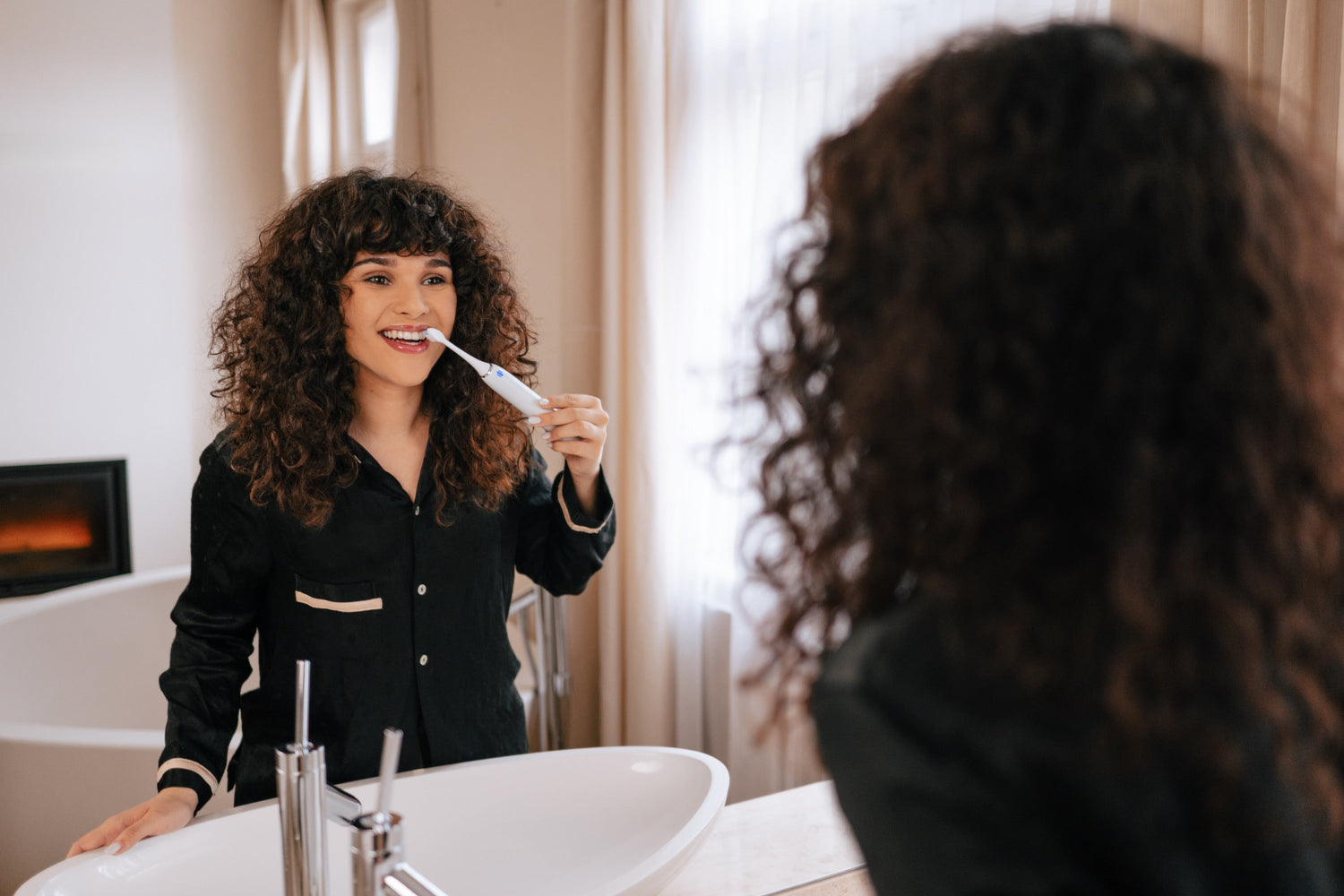
The technique was originally designed for a manual toothbrush and requires you to practise small vibrating movements with your wrist. It works, but it takes patience. Today, there is an easier option. A sonic toothbrush produces thousands of gentle vibrations per minute on its own. All you need to do is position it correctly and guide it along your teeth.
That is the whole trick. You are not brushing more. You are brushing the right place.
The Bass Technique with a Sonic Toothbrush Step by Step
Place the brush head at a 45° angle to the gumline. The tips of the bristles should point slightly under the edge of the gum rather than straight at the tooth.
Do not press down. At all. Sonic vibrations work best when the bristles are only lightly touching the teeth. Applying pressure bends them and reduces their effectiveness.
Move the toothbrush slowly from one tooth to the next. You do not need to create the vibrations yourself. The brush head does that for you. Your hand simply guides the direction.
Work in small sections. Focus on two or three teeth for a few seconds, then move on. Avoid sweeping across half of your jaw in a single motion.
Clean both the outer and inner surfaces of your teeth. For the inner surfaces of the front teeth, hold the brush head vertically so that it fits more easily.
Brush the chewing surfaces as usual. There is no need to worry about the angle there.
And now for the mistakes we see time and time again:
Applying pressure – This is especially unnecessary with a sonic toothbrush. The bristles bend and cannot reach the gumline properly.
Scrubbing from side to side as though you were using a manual toothbrush – This only interferes with the sonic toothbrush and prevents it from doing its job.
Skipping the gumline – In other words, missing the exact area that needs the most attention. A light touch is always more effective than brute force.

What Equipment Do You Need?
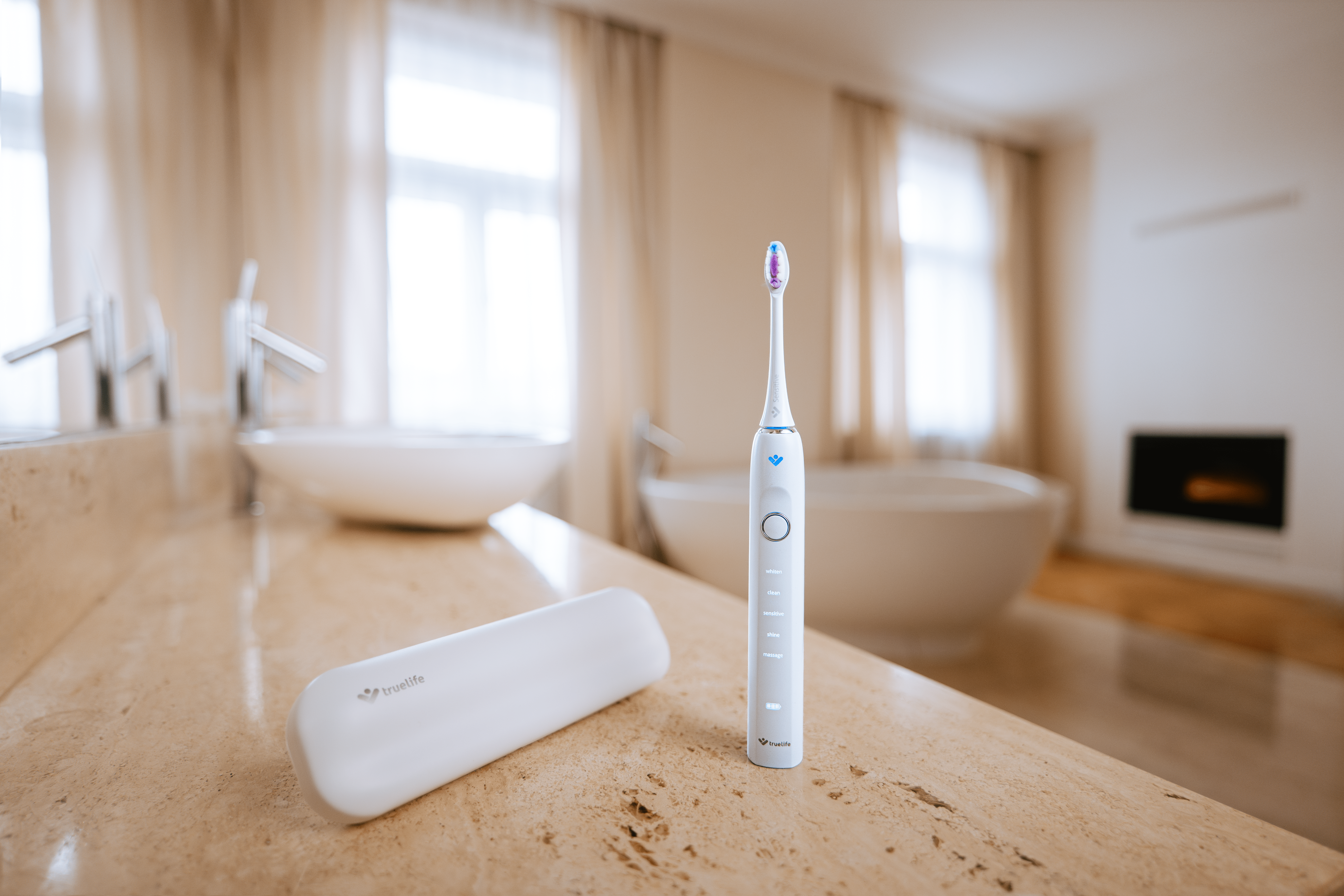
For the Bass technique, all you need is a toothbrush that delivers gentle vibrations and does not leave you counting the seconds. That is exactly what the Truelife SonicBrush Clean70 UV is designed to do. Its timer alerts you every 30 seconds when it is time to move on to the next quarter of your mouth, and the toothbrush switches itself off after two minutes.
Because brush heads deserve proper hygiene too, the UV steriliser in the charging station helps eliminate bacteria after brushing. You can find all the essentials in our article on how to brush your teeth correctly with a sonic electric toothbrush.
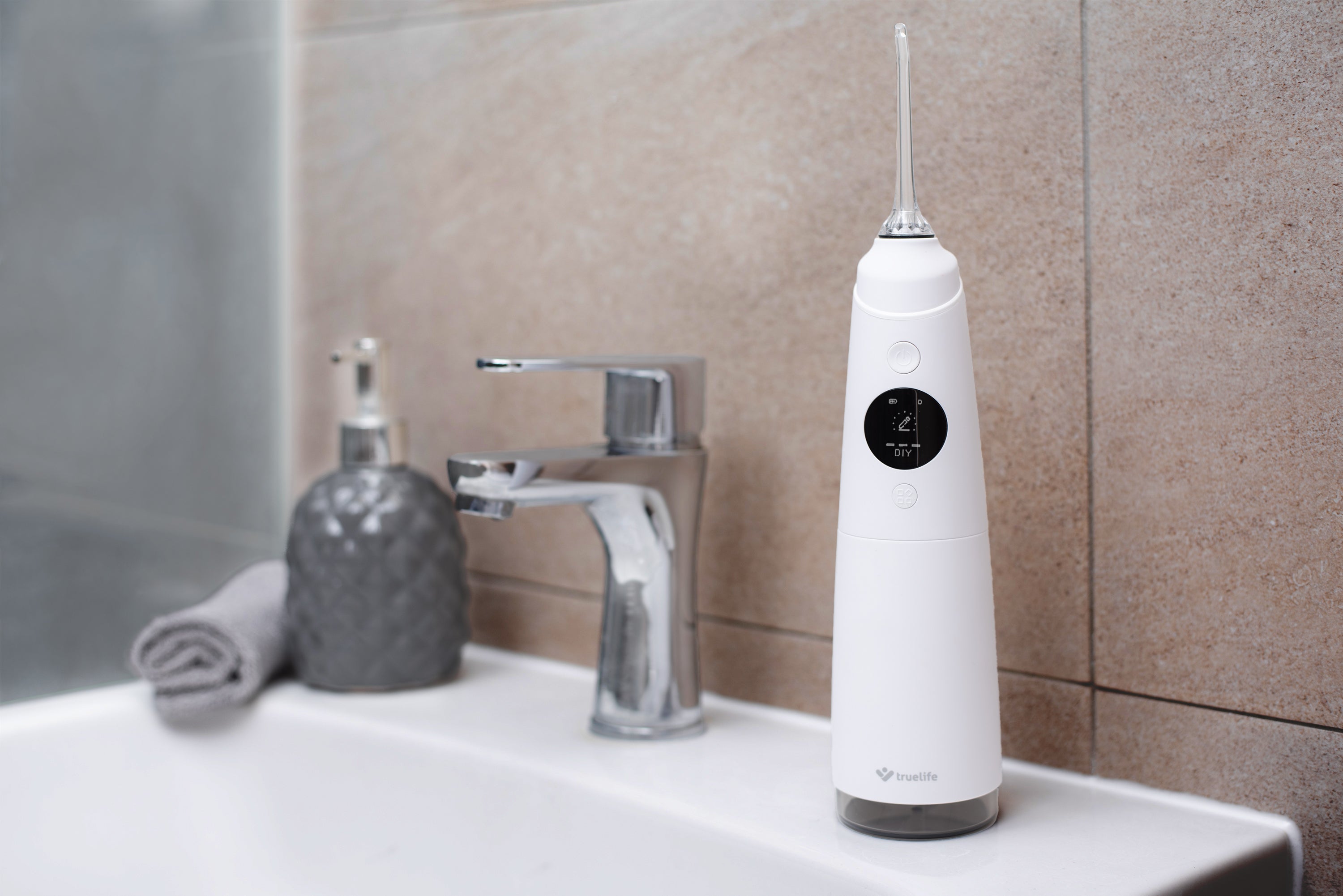
However, even the best bristles cannot reach everywhere. Interdental spaces and the deepest areas around the gums remain out of reach. That is where the Truelife AquaFloss Compact water flosser comes in.
A fine stream of water rinses the spaces between the teeth and along the gumline, while Pulse mode gently massages and stimulates the gums. With five cleaning modes, everyone can adjust the intensity to suit their needs. It does not replace a toothbrush, but together they make an unstoppable team.

Frequently Asked Questions
How Long Should You Brush Your Teeth Using the Bass Technique?
Two minutes is enough. Divide your mouth into four sections and spend approximately 30 seconds on each one. A sonic toothbrush with a built in timer keeps track of the time, so you do not have to count.
Can You Use the Bass Technique with a Manual Toothbrush?
Yes. That is what the technique was originally designed for. However, you need to practise the small vibrating movements yourself and make sure you are not applying too much pressure. A sonic toothbrush creates the vibrations automatically, making the technique easier and more precise from day one.
Why Do My Gums Bleed When I Brush?
Bleeding gums are most commonly a sign of plaque build up and irritation around the gumline. Once you start cleaning the gumline regularly and gently, the problem will usually improve within a few weeks. If the bleeding continues, visit your dentist or dental hygienist.
Is the Bass Technique Suitable for Sensitive Gums?
Yes. It is one of the gentlest brushing techniques available. It uses soft vibrations without any pressure, so it does not irritate the gums. It can also be suitable for people with braces or dental implants.
Can a Water Flosser Replace Interdental Brushes and Dental Floss?
No. A water flosser is a supplement, not a replacement. But it is a very useful one. It rinses the spaces between the teeth and along the gumline, and many people find it so convenient that, unlike dental floss, they actually use it every day.